

Porcelain and ceramic tiles are both popular choices for homes and commercial spaces, but they are not always suited to the same job. The right choice depends on where the tiles are being installed, how much wear they will get, how often they need cleaning, and whether they are being used on walls or floors.
Porcelain tiles are usually denser and more water resistant, which often makes them a strong choice for busy floors, bathrooms, showers and utility rooms. Ceramic tiles are often easier to cut and can work well for kitchen walls, splashbacks, bathroom walls and decorative areas.
The safest way to choose is to look at the room first, then the tile. A suitable ceramic tile can be better than the wrong porcelain tile, and a suitable porcelain tile can help avoid problems in high-use or wet areas.
What Is the Difference Between Porcelain and Ceramic Tiles?
Porcelain and ceramic tiles are both made from clay and fired in a kiln. The main difference is how they are made. Porcelain is usually fired at a higher temperature and made from a finer, denser clay. This makes it harder, less porous and more resistant to water than many standard ceramic tiles.
Ceramic tiles are usually slightly softer and easier to cut. That can make them useful for wall tiling, splashbacks and areas with lots of sockets, corners, trims or smaller cuts.
The important thing is that not every tile is suitable for every surface. Some tiles are designed for walls only. Others are suitable for floors. Some can be used in wet areas, while others are better kept to dry walls or lighter-use rooms. Always check the tile specification before buying.
| Feature | Porcelain Tiles | Ceramic Tiles |
| Durability | Better suited to busy floors and high-use rooms | Good for walls and lighter-use floors, depending on rating |
| Water resistance | Usually lower water absorption | Can work in bathrooms, but wet-area suitability must be checked |
| Cleaning | Easy to clean when fitted and grouted properly | Easy to wipe down on walls and splashbacks |
| Cutting and fitting | Harder to cut because it is denser | Easier to cut around sockets, trims and smaller wall areas |
| Cost | Often more expensive | Often more budget-friendly |
| Best uses | Bathrooms, kitchens, hallways, floors, utility rooms, commercial spaces | Walls, splashbacks, bathroom walls, kitchen walls, decorative areas |
| Maintenance | Usually low maintenance when used in the right room | Usually low maintenance on walls and lower-impact areas |
When Are Porcelain Tiles the Better Choice?
Porcelain tiles are often the better choice when the tiled area needs to cope with regular use, moisture or heavier cleaning. They are commonly used on floors because they are dense and hard-wearing.
Busy Floors and High-Traffic Areas
Porcelain tiles are often a good option for kitchens, hallways, utility rooms and commercial floors. These are the areas that deal with wet shoes, pets, bags, furniture, dropped items and regular cleaning.
On a busy floor, the tile needs to be strong enough for daily use and practical enough to keep clean. Porcelain is usually better suited to this than many ceramic wall tiles or softer materials. The tile still needs to be rated for floor use, and the subfloor still needs to be prepared properly before installation.
For help choosing suitable floor tiles for kitchens, bathrooms, hallways and commercial spaces, check out our Surrey floor tile installation services
Bathrooms, Showers and Wet Areas
Porcelain tiles are often used in bathrooms, showers and wet areas because they usually absorb less water than standard ceramic tiles. That makes them useful for rooms where steam, splashes and cleaning are part of everyday use.
Porcelain is not a shortcut around good preparation, though. Wet areas still need the right backing, adhesive, grout and fitting method. A good tile fitted badly can still cause problems, especially around showers, corners and edges.
Larger Floors and Open-Plan Rooms
Porcelain tiles can work well on larger floors because they are strong enough for everyday use and are available in many sizes and finishes. Larger porcelain tiles can also mean fewer grout lines to clean.
With fewer joints across the floor, there are fewer places for dirt and moisture to collect. This can make day-to-day cleaning easier, especially in kitchens, bathrooms, hallways and open-plan areas.
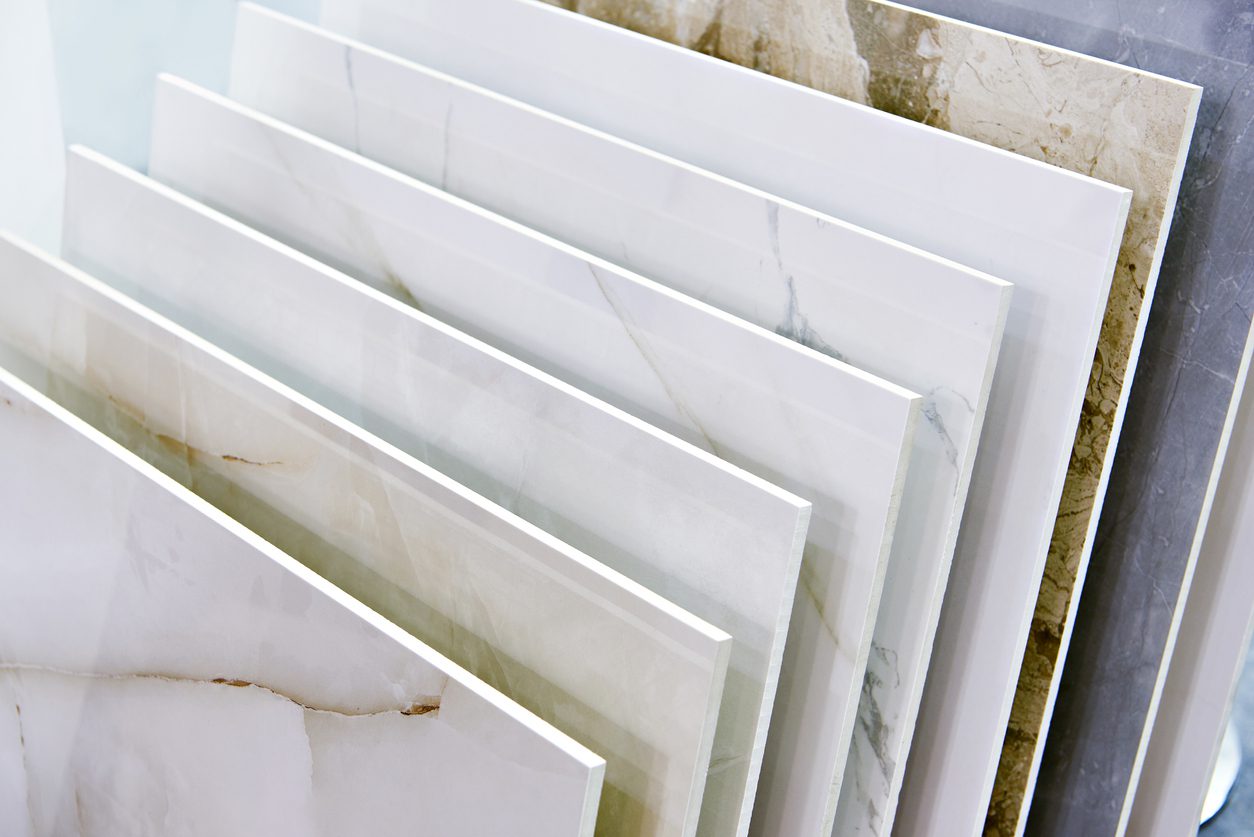
When Are Ceramic Tiles the Better Choice?
Ceramic tiles should not be seen as the weaker option in every case. Used in the right place, they can be practical, easy to clean and cost-effective.
Kitchen Walls and Splashbacks
Ceramic tiles are often a strong choice for kitchen walls and splashbacks. They are easy to wipe clean after cooking and are available in many colours, shapes, sizes and finishes.
Because ceramic is usually easier to cut than porcelain, it can be useful where the tiler needs to work around sockets, cabinets, trims and smaller wall sections. That matters on splashbacks, where awkward cuts are common.
Bathroom Walls Outside the Heaviest Wet Zones
Ceramic tiles can work well on many bathroom walls, especially outside the main shower or wet zone. They can provide an easy-to-clean surface around basins, baths and general wall areas.
For shower walls and areas exposed to heavy moisture, porcelain may be the better choice depending on the tile specification. The decision should come down to the exact tile, the wall surface and how much water the area will receive.
For help choosing and installing tiles for splashbacks, bathrooms and feature walls, learn more about our bathroom tiling services in Surrey .
Decorative Wall Areas
Ceramic tiles work well for metro tiles, patterned tiles and feature wall sections. They are useful where the tile does not need to handle foot traffic, heavy impact or constant wet use.
For example, ceramic can be a sensible choice for a kitchen splashback, cloakroom wall, basin area or decorative wall section. It gives you a wide choice of finishes without using a floor-grade tile where it is not needed.

Which Is Better for Kitchen Tiles?
Kitchens usually need more than one tile decision. The floor and the walls have different jobs, so the same material is not always the best choice for both.
Kitchen Floors
Porcelain is often the better choice for kitchen floors because it can cope with foot traffic, food spills, regular cleaning and movement around units and appliances. It is also suitable for many homes where the kitchen is used as a main route to the garden, hallway or utility room.
A kitchen floor tile should be easy to clean and suitable for the amount of use the room gets. It should also be fitted on a properly prepared surface, because poor preparation can lead to cracked grout, loose tiles or uneven edges.
Kitchen Walls
Ceramic is often a practical choice for kitchen walls and splashbacks. It is easy to wipe clean and easier to cut around sockets, cabinets, shelves and awkward edges.
Porcelain can also be used on kitchen walls, especially where a customer wants a specific finish or a more durable surface. The main point is that wall tiles and floor tiles should be chosen separately, based on what each surface needs to do.
Which Is Better for Bathroom Tiles?
Bathrooms need careful tile choices because water, steam and cleaning are part of daily use. Floors, walls and shower areas all have different requirements.
Bathroom Floors
Porcelain is often a strong choice for bathroom floors because it is dense, water resistant and suitable for regular cleaning. It can work well in ensuites, family bathrooms and shower rooms when the tile finish is suitable for floor use.
Slip suitability should always be checked. A polished tile may look good but may not be the right choice for a bathroom floor. A suitable finish, proper preparation and correct installation all matter.
Bathroom Walls and Showers
Porcelain is often a good choice for shower walls and wet zones because of its low water absorption. Ceramic can still be suitable for many bathroom wall areas, especially where the wall is not exposed to constant water.
Natural stone can also be used in bathrooms, but it needs more care. Some stone tiles may require sealing and more maintenance than porcelain or ceramic. The right choice depends on how the bathroom is used and how much maintenance you’re comfortable with.
Which Tile Is Easier to Clean?
Both porcelain and ceramic tiles can be easy to clean when they are used in the right place and fitted properly. The material matters, but it is not the only factor.
The easiest tile to clean depends on tile size, surface texture, grout width, grout colour, room use and installation quality. Porcelain is often practical for floors because it is dense and water resistant. Ceramic is easy to wipe down on walls and splashbacks.
Larger tiles can mean fewer grout lines, which gives you fewer joints to scrub. Very textured tiles may hide small marks, but they can also trap more dirt if used in the wrong room.
Poor installation can also make cleaning harder. Uneven tiles, rough grout lines and badly finished edges can collect dirt and water. This is why preparation, setting out and fitting matter as much as the tile itself.
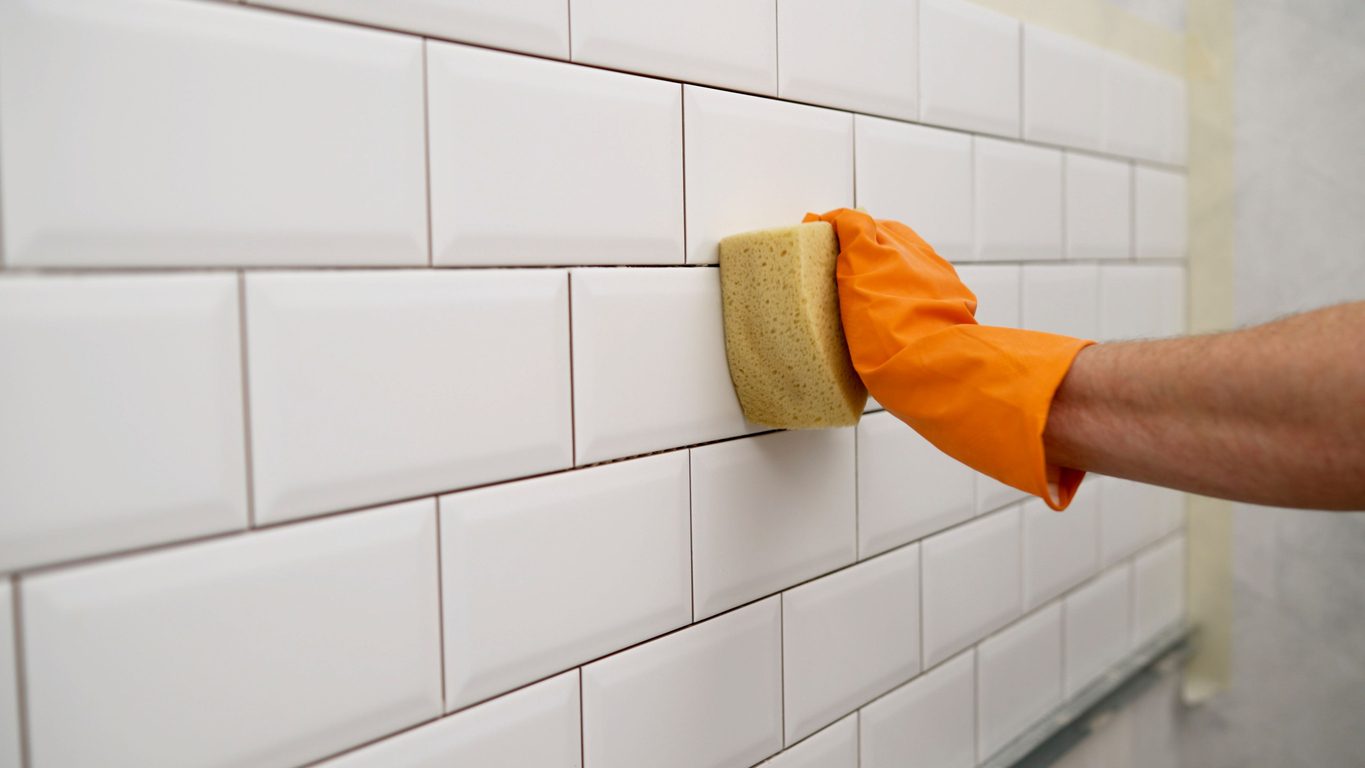
Which Tile Lasts Longer?
Porcelain usually has the advantage on busy floors, wet rooms and commercial areas because it is denser and more resistant to daily wear. It is often the better option where the floor needs to deal with foot traffic, regular cleaning and moisture.
Ceramic can last well on walls, splashbacks and lower-impact areas. A ceramic kitchen splashback, for example, does not need to handle the same pressure as a hallway floor.
The wrong use can shorten the life of either tile. A wall-only ceramic tile should not be fitted on a busy floor. A porcelain tile can also fail if the floor is not prepared properly or if the wrong adhesive or grout is used. Longevity comes from choosing the right tile for the job and installing it correctly.
Is Porcelain Worth the Extra Cost?
Porcelain tiles often cost more than ceramic tiles, but the extra cost can make sense in the right place.
Porcelain is usually worth considering for busy floors, bathrooms, shower areas, utility rooms, rental properties and commercial spaces because these areas need tiles that can handle heavier use, moisture and regular cleaning.
Ceramic may be better value for walls, splashbacks, decorative areas and lower-impact rooms. It can also be a practical option when the design involves smaller wall sections or detailed cuts.
In simple terms, porcelain is often worth it for floors and wet areas. Ceramic is often good value for walls and splashbacks. The final choice should depend on the tile rating, room use and installation requirements.
Does Installation Change Which Tile You Should Choose?
Yes. Installation can affect which tile is more suitable.
Porcelain is denser, so it is harder to cut and fit. This can matter where there are lots of corners, trims, pipework or detailed cuts. Ceramic is usually easier to cut, which can make it practical for splashbacks, bathroom walls and smaller wall areas.
Floors also need more preparation than many people expect. The subfloor needs to be checked before tiles are laid. If the surface is uneven or unsuitable, it can lead to cracked grout, loose tiles or uneven edges. Bathrooms and wet areas also need moisture-aware preparation, especially around showers and baths.
Large tiles need careful setting out because mistakes are more obvious. Small changes in layout can affect cuts around doors, edges, units and fixtures.
Choosing the tile is only part of the job. The preparation and fitting decide how well the tiles perform once they are in everyday use.
Porcelain or Ceramic: Which Should You Choose?
Choose porcelain tiles for busy floors, wet areas and rooms that need regular cleaning. Porcelain is usually the better option for kitchen floors, bathroom floors, showers, hallways, utility rooms and commercial spaces because it is denser and more water resistant than standard ceramic.
Choose ceramic tiles for walls, splashbacks and lower-impact areas. Ceramic is often a practical choice for kitchen walls, bathroom walls outside heavy wet zones, cloakrooms and decorative sections. It is usually easier to cut, which helps around sockets, trims, cabinets and smaller wall areas.
The right answer is not always “porcelain is better” or “ceramic is cheaper”. The right answer is the tile that suits the room, the surface and the way the area will be used.
Need Help Choosing Between Porcelain and Ceramic Tiles?
Choosing between porcelain and ceramic tiles is easier when you know where the tiles will be fitted and what they need to cope with. A busy kitchen floor, a shower wall and a simple splashback all have different requirements.
We can help you compare porcelain and ceramic tiles based on the room, surface, cleaning needs and installation requirements. We can also help with tile supply and professional installation for wall tiles in Surrey and also floor tiles in Surrey.
Contact us today to discuss your project.

